Marketing & Sales
How I Structure a VSL: The Decisions Behind My Cold Email Offer
· Updated
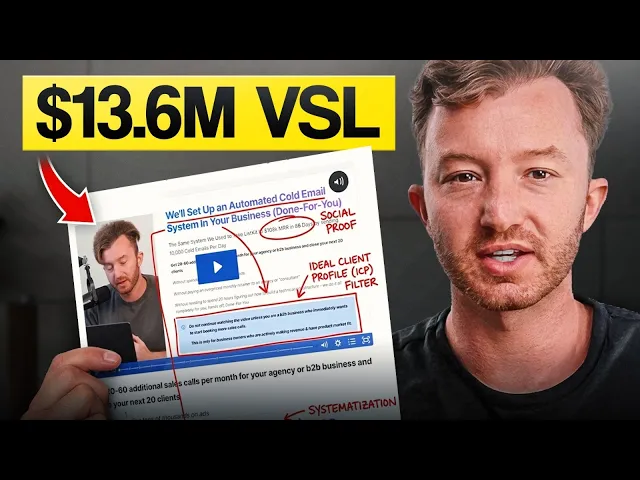
I'm Daniel Fazio. When I break down a video sales letter, I want you to understand why each section is there, not copy a script without understanding the offer. In this example, I was selling a done-for-you cold email setup, using a screen-shared document that I narrated alongside the slides.
The sequence was to explain the desired result, show evidence, make the system understandable and address the questions that could stop someone buying. This was an older version of the offer: I explicitly said its pricing and packages had changed.
I started with what the buyer wanted to achieve
The headline described building cold email infrastructure inside the buyer’s business. Then I explained the result the buyer wanted, rather than assuming that the phrase cold email would communicate the value on its own.
The supporting bullets came from pain points I had heard on sales calls: spending on ads, paying an ongoing outside retainer and spending time figuring out the technical setup. Those were reasons for the way I framed that offer, not universal objections every service buyer has.
I gave the viewer a map and evidence
I included chapters and player controls because the buyer might want to skip to the part that answered their question. I also told them what I was about to cover: results, why to consider the channel, the work involved, deliverables, pricing and questions.
After making the result claim, I showed campaign examples and case studies. The purpose was to support the promise I had just made. The historical claims and screenshots in that presentation are not a guarantee for another campaign.
Client Ascension related reading: the acquisition guide puts the choice of channel and the sales process in a wider context.
I made the mechanism visible
I drew the system: leads, domains, inboxes and a sending platform, connected in a way the buyer could understand. The diagram gave context before I listed the work needed to make the setup function.
Then I walked through the actual steps involved in setup and deliverability. I was not trying to manufacture difficulty. I wanted the prospect to understand what the service would take off their plate and why doing it correctly mattered.
Client Ascension related reading: the deliverable-stacking lesson develops that way of explaining a service in detail.
I connected the deliverables to the handoff
I explained what we would handle: domains, infrastructure, connecting the sending platform, scripts and lead lists. That list meant more after the viewer had seen how the pieces fitted together.
I also showed the handoff timeline, logins, training and support. A buyer could otherwise understand the setup and still worry about what they would have to learn or manage afterward.
I treated pricing and qualification as offer decisions
In that version, I revealed pricing. I said the packages and prices had since changed. My point was that showing an exact price, a range or a different qualifying condition depends on the offer; there was no rule to reveal every price in every VSL.
I wanted a disqualifier so the next step attracted people who could use and afford the service. I also addressed cheaper alternatives by explaining differences in what was included. A comparison should fit the actual offer: if a cost advantage is not true, that is not the comparison to put in the presentation.
I used common sales-call questions at the end
After the initial call to action, I answered questions people repeatedly asked on calls, including compatibility, training, support and how the product worked. Then I gave the next step again.
The useful exercise is to trace each section back to something the buyer needs to understand or decide. This breakdown explains the historical presentation’s structure, rather than preserving its old promotion or suggesting its legal claims apply to every sender.
Adapted by Client Ascension with AI assistance from Daniel Fazio's lesson. The first-person narrative follows the source speaker’s account. Watch the original video