Business Growth
Reviewing Offers, Client Proof and Agency Capacity: Lessons From a Panel
· Updated
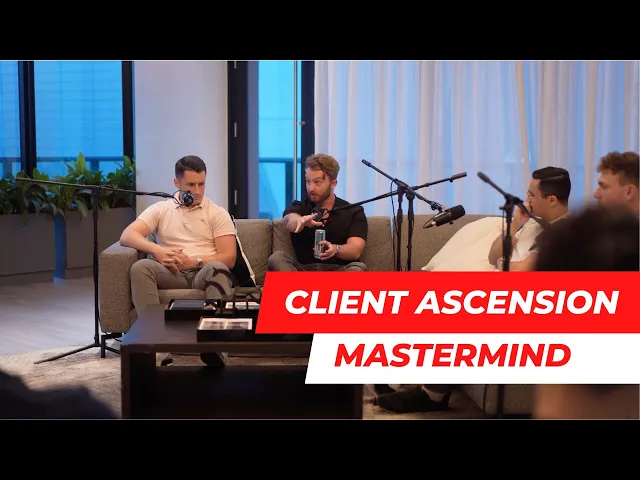
The historical discussion from the April 2023 Tampa mastermind brings several voices together around a connected problem: making an offer understandable, supporting it with real work and building a team that can deliver. The conversation moves between positioning, customer feedback, sales practice and the limits of the owner’s time.
We recommend using the panel as a set of questions to apply to an actual service. The recommendations below distinguish what was discussed from a claim that a particular offer, hiring decision or content channel will produce the same result for another business.
Make the offer tangible without enlarging the claim
The historical recording recommends making an offer tangible through a relevant explanation of the work and evidence. We treat that as a positioning suggestion, not verification of an outcome for a particular buyer.
We suggest checking the buyer, work and evidence together. A specific statement still needs support; adding a number does not supply that support. The offer-formulation article can help separate the desired outcome from the deliverable, mechanism and responsibilities before the message becomes more dramatic.
Review the claim, risk allocation and evidence together
The panel uses market sophistication to discuss why a once-unusual service description can become familiar. Its proposed response combines a claim, risk reversal and evidence instead of relying only on a novel mechanism. The conversation also returns to the difficulty of obtaining the first pieces of proof. This is a pattern proposed during the historical discussion, not a statement of current Client Ascension offer or guarantee terms.
We recommend reviewing what the evidence actually establishes before deciding on the promise. A risk condition is a commitment to explain and fulfill, not proof that a result is certain. Use the article on using case studies when deciding which client result can be documented and what its story should preserve.
Use a relevant story rather than an interchangeable screenshot
In the recording, the discussion moves from the number of testimonials to the details that make a story recognizable: a similar offer, background, concern or business arrangement. Sales-team members are encouraged to understand those stories rather than use a result image without the surrounding account.
We suggest choosing a story because it answers the buyer’s real uncertainty. Keep the actual operator, work, period and limitation visible. A person recognizing their concern in a case does not establish that their own decision will have the same outcome, and an unresolved objection remains something to understand rather than pressure away.
Ask what the customer wants to buy before fixing the package
The panel discusses asking customers and prospects what they want rather than forcing everyone into a predetermined package. One example separates ad scripting and editing from managing the ad account: the prospective buyer wanted production help while retaining control of the account. The discussion treats that as a reason to understand the preferred division of work.
We recommend recording that division explicitly: what the agency produces, what the customer controls and what support is included. Repeated requests can inform a repeatable package, but an individual request still needs a capacity and scope decision. Consider feedback as input to the offer rather than permission to accept every variation.
Make leadership and incentives part of delivery
The recorded answer about team culture argues for moving beyond paying for isolated tasks. It discusses explaining the impact of the work, showing the accountability expected of the team, public recognition and knowing people beyond their assigned output. Other contributions suggest considering what motivates a particular person rather than assuming money is the only lever.
We suggest naming the role, accepted output and escalation path before adding an incentive. Check that the behavior being rewarded supports useful delivery rather than an attractive activity count.
Keep sales practice and operating measures visible
In the discussion of what should have started earlier, a sales-side answer emphasizes knowing the relevant rates and continuing to watch call recordings. Later, a question about staying capable across sales, marketing and delivery receives suggestions about peer mock-call pairings and recurring operating conversations. The speakers also disagree about whether themed days or time blocks suit the work.
We recommend choosing a practice and review rhythm the actual workload can support. Record what happened at each step and inspect the conversation before changing the whole offer. The acquisition guide can help relate a reply, booked conversation and paid client across the sales cycle instead of treating them as interchangeable events.
Check attribution before replacing a retainer with revenue share
Toward the end of the recording, a content agency asks about working more closely with selected clients through revenue share. The discussion raises a central difficulty: someone can discover a business through a video, follow another account and later buy through a different route. Suggested approaches include tracked links, access to reporting, questions about discovery and defined performance bonuses, while one response suggests considering a higher retainer when attribution is difficult. These are participants’ historical suggestions, not verified attribution measurements or evidence that revenue came solely from the content.
We suggest deciding what event earns the fee, which records both parties can inspect and what an existing audience contributes. Do not convert a follower increase or a last visible click into a complete account of revenue caused by the service. A fee change also needs a clear discussion of the work and the possibility that an existing client will not accept the new arrangement.
Develop capacity without pretending the owner’s judgment disappears
The closing response distinguishes the people available today from people whose skills can be developed over time. Earlier answers acknowledge that some valuable activities still depend on a particular person, while also challenging the assumption that nobody else can perform the work well. The discussion presents development as work, not an immediate consequence of making a hire.
We recommend identifying the task that needs a dependable standard, then preparing an example, review process and route for questions. Keep production, management and client communication visible in the capacity plan. The next useful change is the one that addresses the actual constraint while preserving the service already promised. The agency-scaling article can help review sales-call availability, delivery roles and the handoffs that need an owner before increasing volume.
Prepared by Client Ascension with AI assistance. Documentation checked 2026-11-01.