How I Combine Cold Calling and Email in an Outbound Sales Process
I'm Dylan Rich. I train outbound salespeople and help businesses recruit trained callers and sales representatives. In my conversation with Andre, I explained how we use cold email and cold calling together in our own acquisition process.
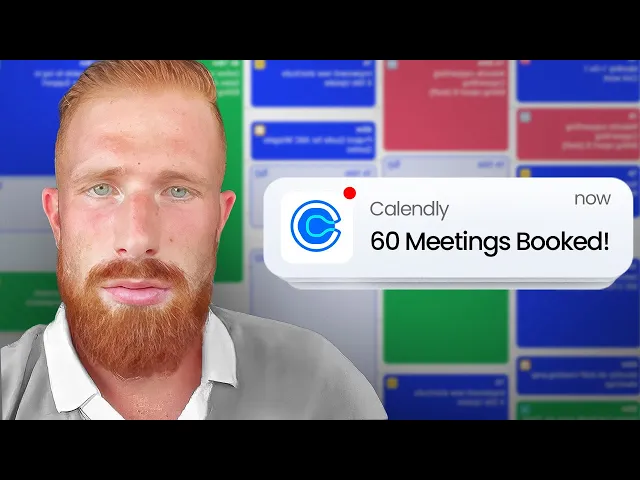
I reported our internal calling team booking about 40–60 meetings a month, alongside roughly 15–20 from cold email. Those were separate channel counts from our business. The useful process is how we choose whom to call, handle a reply and track what happens between dialing and a booked meeting.
Calling and email do different jobs
Email lets us reach people at scale, while a call gives us a live conversation. On the phone, I can ask a question, clarify what someone means and answer an objection while we are talking.
I do not look at the channels as an either-or choice. Some people will not read the email, but may answer a call. Combining the touchpoints gives us another way to reach someone instead of only waiting for the email campaign to produce a reply.
Client Ascension related reading: David’s Amazon-agency account explains Amazon expertise, approximate outreach metrics, audit-led sales and delegation.
I prioritize the people worth speaking to directly
Calling takes human time, so I prioritize high-value prospects from the list rather than treat every contact as equally important. I described sending an email and making the first call on the same day as part of a coordinated sequence.
If I have already emailed someone, I can refer to that message when I call. That gives the conversation a starting point. I also described letting people cool off and moving them into nurture after repeated unanswered attempts rather than treating one sequence as something to continue forever.
An interested reply is an opportunity for a conversation
When someone replies with interest, I call and ask whether they have a short moment to talk. My example was a simple acknowledgment of their email and an offer to save the back-and-forth, followed by asking permission for a brief conversation.
If it is a bad time, I ask about another time to speak. The aim is to turn interest into a conversation or a scheduled meeting rather than simply send another document and hope the person keeps replying. It still depends on the prospect agreeing to talk.
The dialer and workflow make the activity reviewable
I want the workflow to show whether a call was unanswered, reached voicemail, became a conversation or led to a booking. Recording calls also gives us something to review: what I said, my tone and where the conversation stopped.
In the workflow we discussed, CRM contacts and Slack notifications helped the team find the lead, and a dialer integration supported making the call. The point was having the lead information and the next action together instead of manually copying numbers and separately reconstructing the history.
Client Ascension related reading: Vixelstudio’s case study describes cold calling and hiring alongside the team’s sales and delivery systems.
I separate a connection from a useful conversation
The first count is total dials. A connection means the intended person picked up; even if they immediately hang up, that is still a connection. It is different from a conversation where I can explain the service and learn something about the prospect.
Then I track conversations that turn into booked meetings. Keeping those steps separate helps identify whether to work on reaching the intended person, opening the call or moving a useful discussion toward a meeting.
I validate the channel before hiring someone to run it
Before hiring a caller, I want the owner to have tried the process, booked meetings and put some actual activity on paper. Then there is a process to teach and a way to judge the role, rather than expecting a new hire to discover whether the channel works from scratch.
I was nervous on the phone when I began. My advice is to practice, review calls and give yourself time to improve. A bad call does not tell the next person anything about you, so the next conversation is a fresh attempt.
Adapted by Client Ascension with AI assistance from Dylan's interview. The first-person narrative follows the source speaker’s account. Watch the original video