How I Took a Consulting Platform Out of Development and Into Customer Conversations
My background was in engineering, technology and consulting. I had built a project platform for my own consulting work long before trying to turn it into a product other firms would buy.
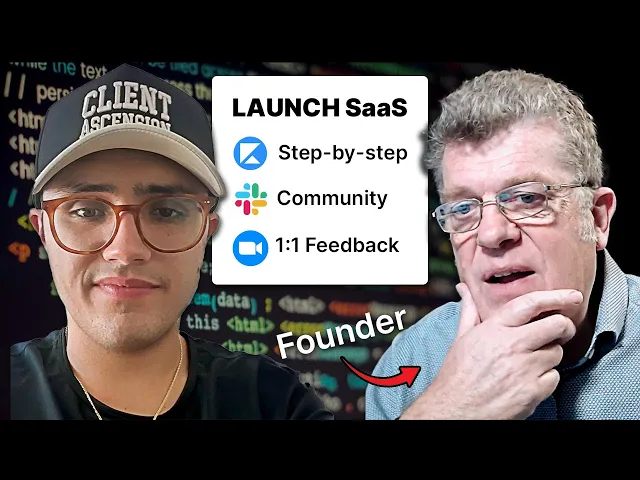
The product idea connected training with project execution. By the interview, I said we had about twelve customers through Client Ascension, but I was still learning from them and changing the proposition.
The idea was to connect guidance with work being completed
I wanted people to find guidance inside the project rather than watch training separately and then work out how to apply it. Tasks, understanding checks, deliverable review and the business outcome were parts of that thinking.
The important question was whether the approach made sense to a customer, not only whether I could develop the software. I had spent money building something that felt convincing in my own head before properly testing that proposition.
Consulting firms wanted clients as well as project tools
I initially emphasized project management, embedded training and document analysis. Customer conversations showed me that consulting firms also wanted help winning work.
I developed a LinkedIn-focused project covering the setup and activities around lead generation, alongside the platform used to deliver consulting. That change came from customer feedback rather than deciding that more software features alone would answer the problem.
Client Ascension related reading: Luke’s automation-offer account describes changing an offer after early clients churned.
I brought in help where my own time was the constraint
I found the LinkedIn work time-consuming. Following an introduction through the program, Farooq became involved in the marketing side, with his team contributing to the business.
I reported roughly one qualified new customer a week from LinkedIn at that stage. I was still onboarding deliberately and testing the system, rather than trying to maximize volume before the product was ready for it.
A clearer offer began with the customer brief
Nick Verge reviewed the offer and told me it was too abstract and complicated. I used the questions and frameworks to organize information about the customer, market, offer, guarantee and proof before writing a landing page.
I incorporated that thinking into the platform’s AI-supported workflow: begin with the raw market information, develop the customer picture and organize the sales arguments. That was a way of making the proposition more concrete, not proof that every generated proposal would win.
Client Ascension related reading: Noah’s SEO-agency account describes developing training for brands with their own content teams.
Customer development had to happen alongside development
I said the 50K-per-month goal I had set for the end of the year was not going to happen on that timetable. Consulting income was coming down while the platform business was still growing.
The priority was engagement and learning from customers. I wanted to continue developing the product with that feedback in parallel, instead of returning to the lab and assuming the market would eventually agree with the idea.
Adapted by Client Ascension with AI assistance from Raglan's interview. The first-person narrative follows the source speaker’s account. Watch the original video